
 EN
EN



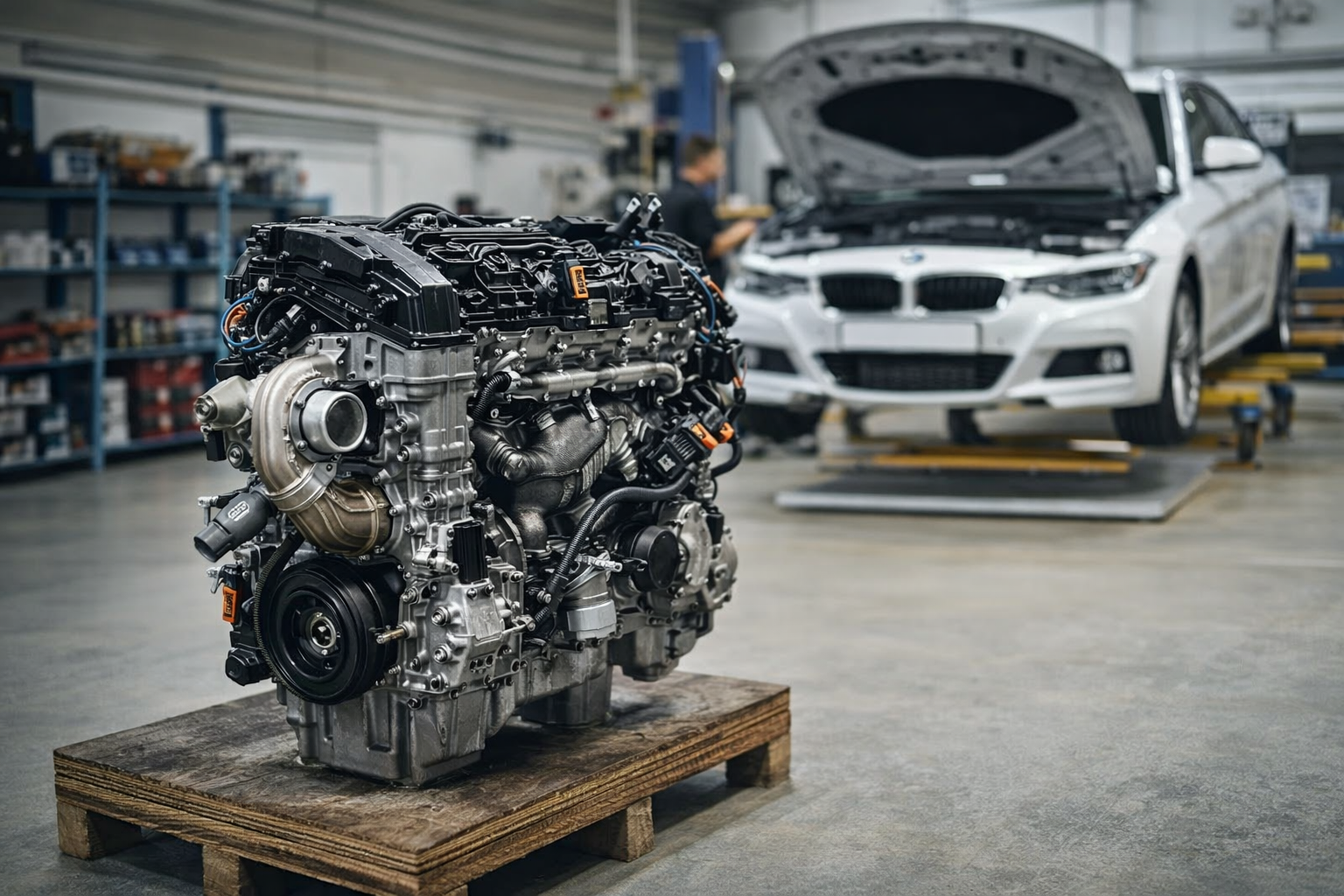
The BMW B48 engine is one of the most widely used 2.0L turbocharged petrol engines across modern BMW vehicles, as well as selected models from Mini and the 2.0L version of the Toyota Supra by Toyota
As high-mileage vehicles equipped with the B48 continue circulating in Germany, Italy, Spain, Poland, and other EU countries, demand for replacement engines in the European aftermarket is increasing steadily.
For European importers, distributors, and independent workshops, selecting a reliable remanufactured engine supplier in China requires more than price comparison. Quality control, EU compliance, documentation accuracy, and long-term reliability are critical.
This guide explains what European buyers should evaluate before sourcing a BMW B48 remanufactured engine from China.
Overview of the BMW B48 Engine
The BMW B48 was introduced around 2014 as part of BMW’s modular engine family. It is a 2.0-liter inline-four turbocharged petrol engine designed for scalability and efficiency.
In the European market, it is commonly found in:
BMW 320i, 330i, 530i
BMW X1, X3, X5
Mini Cooper S
Toyota Supra 2.0
Because of its modular architecture, many internal components are standardized across power variants (B48B20A, B48B20B, B48B20C). This makes professional remanufacturing technically viable and economically competitive compared to purchasing new OEM units.
Why European Buyers Prefer Remanufactured B48 Engines
In the EU, remanufactured engines are often chosen for structural economic reasons.
First, labour costs in Germany, France, and Northern Europe are high. Rebuilding locally can become expensive, especially when machining capacity is limited. Importing professionally remanufactured engines from China allows workshops and distributors to control total repair costs.
Second, OEM new engines frequently have long lead times. For older production years, availability may be restricted. Remanufactured engines can significantly reduce downtime for fleet operators and independent repair centres.
Third, EU environmental policy strongly supports circular economy principles. The EU Circular Economy Action Plan and carbon reduction targets encourage reuse and lifecycle extension of automotive components. Remanufactured engines align with these sustainability requirements and are increasingly accepted in European B2B markets.
For many EU auto parts importers, remanufactured B48 engines represent a balance between cost control, sustainability, and operational efficiency.
Common BMW B48 Engine Problems European Buyers Should Understand
Understanding failure patterns is important when evaluating remanufacturing quality.
Cooling system leakage is a known issue due to plastic component aging under thermal stress. Inadequate replacement during rebuilding may result in early failure.
Oil consumption problems may occur in high-mileage engines because of worn piston rings and cylinder wall wear.
Timing chain system wear can lead to abnormal noise and long-term reliability risks if not fully replaced.
Turbocharger wear is another critical factor due to high operating temperatures and rotational speed.
A professional remanufacturing process must address these issues systematically: cylinder measurement and re-machining, tolerance restoration, replacement of wear components, and verification of oil pressure and compression performance.
Quality Standards Required for the European Market
Not all remanufactured engines meet the same technical standard. For European buyers, the following criteria are essential.
Cylinder blocks must be inspected and machined according to OEM tolerances to ensure compression stability.
Crankshafts should be measured and dynamically balanced after polishing or regrinding.
All bearings, seals, and gaskets must be replaced with new OE-grade components.
Functional testing is critical. Reliable suppliers conduct hot testing or simulation testing to verify oil pressure, noise level, and operating stability before shipment.
In addition, compatibility with Euro 6 emission requirements should be maintained. Although the engine long block itself does not determine full emissions compliance, rebuild precision affects combustion efficiency and downstream emission performance in EU vehicles.
European Export Compliance and Documentation
For EU importers, export capability is as important as technical capability.
A qualified supplier should understand:
- EORI-related documentation support
- Accurate commercial invoices and packing lists
- Correct HS code classification
- ISPM15-compliant wooden packaging
- Experience with EU VAT and customs procedures
Incorrect documentation can delay clearance in Germany, Italy, or other EU ports, increasing logistics cost and inventory risk.
European buyers should prioritize suppliers with proven export records to EU countries rather than those serving only domestic or regional markets.
How to Evaluate a Chinese B48 Engine Supplier
When selecting a supplier, European importers should assess four core areas:
Machining capability
Does the supplier operate dedicated engine machining equipment and cleaning systems?
Assembly and testing standards
Are engines functionally tested before shipment?
Export experience to Europe
Has the supplier previously shipped to Germany, Southern Europe, or other EU regions?
Warranty structure
Are warranty terms clearly defined for cross-border claims?
Choosing a supplier experienced in supplying remanufactured engines for European importers significantly reduces commercial risk.
BMW B48 Remanufactured Engines for the European Aftermarket
The European independent workshop market continues to grow as vehicles age beyond manufacturer warranty periods.
Imported remanufactured B48 engines can:
- Compete with local rebuilders on cost
- Reduce lead time compared to rebuilding each core individually
- Support bulk purchasing for distributors
- Improve parts availability in Southern and Eastern Europe
For EU distributors building long-term supply chains, consistency and documentation reliability are often more important than minimal price differences.
Conclusion
The BMW B48 engine will remain in strong demand across the European aftermarket for years to come. For EU importers and distributors, selecting a reliable remanufactured engine supplier in China requires attention to machining standards, testing procedures, and export compliance capability.
A supplier that understands European documentation requirements, quality expectations, and sustainability priorities can become a stable long-term partner.
For European buyers seeking cost-effective and compliant BMW B48 remanufactured engines, careful supplier evaluation is essential to ensure consistent performance and reduced operational risk.
Ready to source high-quality remanufactured engines from a reliable engine supplier in China? Fill out our form to get a customized quote within 24 hours. We’ll help you select the right engine model, confirm MOQ, and outline delivery timelines, so you can source with confidence.