
 EN
EN


Why VIN Code Matters When Buying a Remanufactured Engine: B2B Buyer’s Guide
For buyers searching terms like “remanufactured engine replacement”, or specific engine codes such as 306DT, 204DT, or 2TR, the initial focus is often on price and availability.
However, in real-world procurement, especially for workshops, distributors, and automotive parts traders, the most critical factor is not price, but correct engine identification.
This is where the difference between engine code and VIN code becomes essential.
Engine Code vs VIN Code: What’s the Difference
Engine Codes are useful for narrowing down engine type, they define the category, while VIN codes define the exact match.
Engine codes (e.g., 306DT, 204DT, G4NA) identify:
- Engine family
- Displacement and structure
- General technical configuration
VIN Code
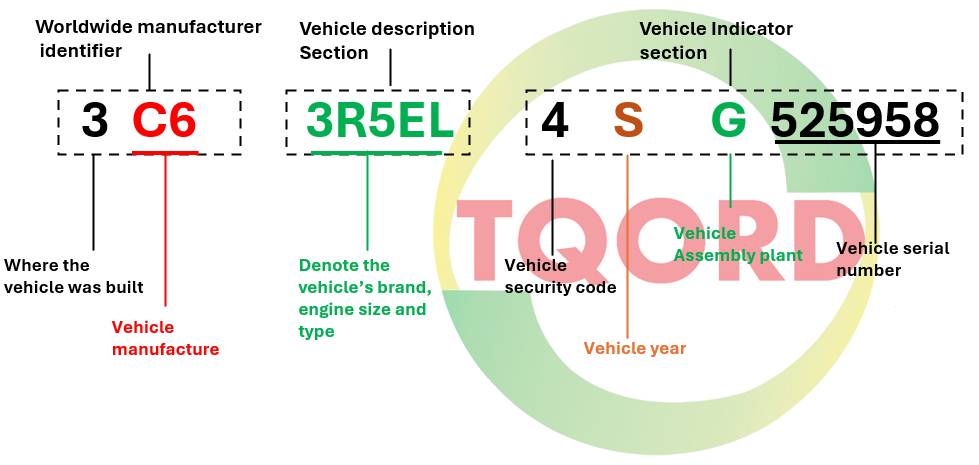
VIN (Vehicle Identification Number) is a unique 17-character identifier for each vehicle
It provides detailed information about:
- Production year
- Emission standard
- Engine configuration
- Market specification
Why This Matters in Remanufactured Engines
Unlike new engines, remanufactured engines must match:
- Vehicle configuration
- Emission requirements
- Mechanical interfaces
Even within the same engine code, variations exist.
Case Example: Land Rover 306DT Engine
The Land Rover 306DT 3.0T engine is a typical example of why VIN matters.
Production Variations: early versions (approx. 2004–2007) → Euro 3, later versions (approx. 2007–2011) → Euro 4
Impact on Remanufacturing
Different emission standards require different ECU calibration, sensor configuration, exhaust system compatibility and different remanufacturing processes and component selection.
Practical Risk
If a buyer selects an engine only based on: “306DT” engines without VIN verification the engine may:
- not meet emission compliance
- product quality not good enough
- require modification and impact delivery time
- or fail to operate correctly
Vehicle-Specific Differences
Even within the same engine family, engines vary depending on the vehicle model.
For example: engine mounting points, transmission interface and cooling and accessory layout, these differences are often invisible at the engine code level.
Real Consequences
Incorrect matching can result in:
- Installation failure
- Additional labor cost
- Delayed delivery
- Customer dissatisfaction
Impact on Pricing and Quotation Accuracy
Incorrect or missing VIN information does not only affect compatibility—it also directly impacts pricing. In remanufacturing, different configurations may require different internal components an accessory. As a result engines with the same engine code can have significantly different remanufacturing costs depending on their exact specification.
How VIN Improves Procurement Accuracy
For workshops, distributors, and traders, VIN-based sourcing ensures correct engine selection, reduced installation risk and higher efficiency.
Professional suppliers must typically Verify VIN before quotation to ensure match exact configuration and adjust remanufacturing process accordingly. This is especially important for discontinued engines, multi-market vehicles and emission-sensitive applications.
For professional buyers should work with suppliers who can:
- interpret VIN data
- align technical specifications
- ensure compatibility
FAQ
- What is a VIN?
A VIN is a unique 17-character code assigned to every vehicle when it's manufactured. This number serves as a fingerprint for the vehicle, providing important information such as the manufacturer, place of origin, and year of production. Traditionally found on the dashboard near the windshield or inside the driver's side door jamb, the VIN can also appear in vehicle documents such as the title, registration, and insurance policy.
- What is structure of VIN?
A VIN takes the 17-character code and breaks it down into digestible pieces of information. The information include:
- Place of Origin
- Original manufacturer (OEM)
- Year of Manufacture
- Vehicle and Engine Type…
- And much more
Ready to source high-quality remanufactured engines from a reliable engine supplier? Fill out our form to get a customized quote within 24 hours. We’ll help you select the right engine model, confirm MOQ, and outline delivery timelines, so you can source with confidence.