
 EN


The BMW N13B16A is a 1.6-litre turbocharged inline-four petrol engine used in selected BMW models from the early-to-mid 2010s. Depending on engine output and market, N13 variants were fitted to models such as the F20/F21 1 Series and F30/F31 3 Series. For independent garages, engine distributors and parts traders sourcing BMW replacement engines, confirming the exact engine code and vehicle specification is essential before ordering.
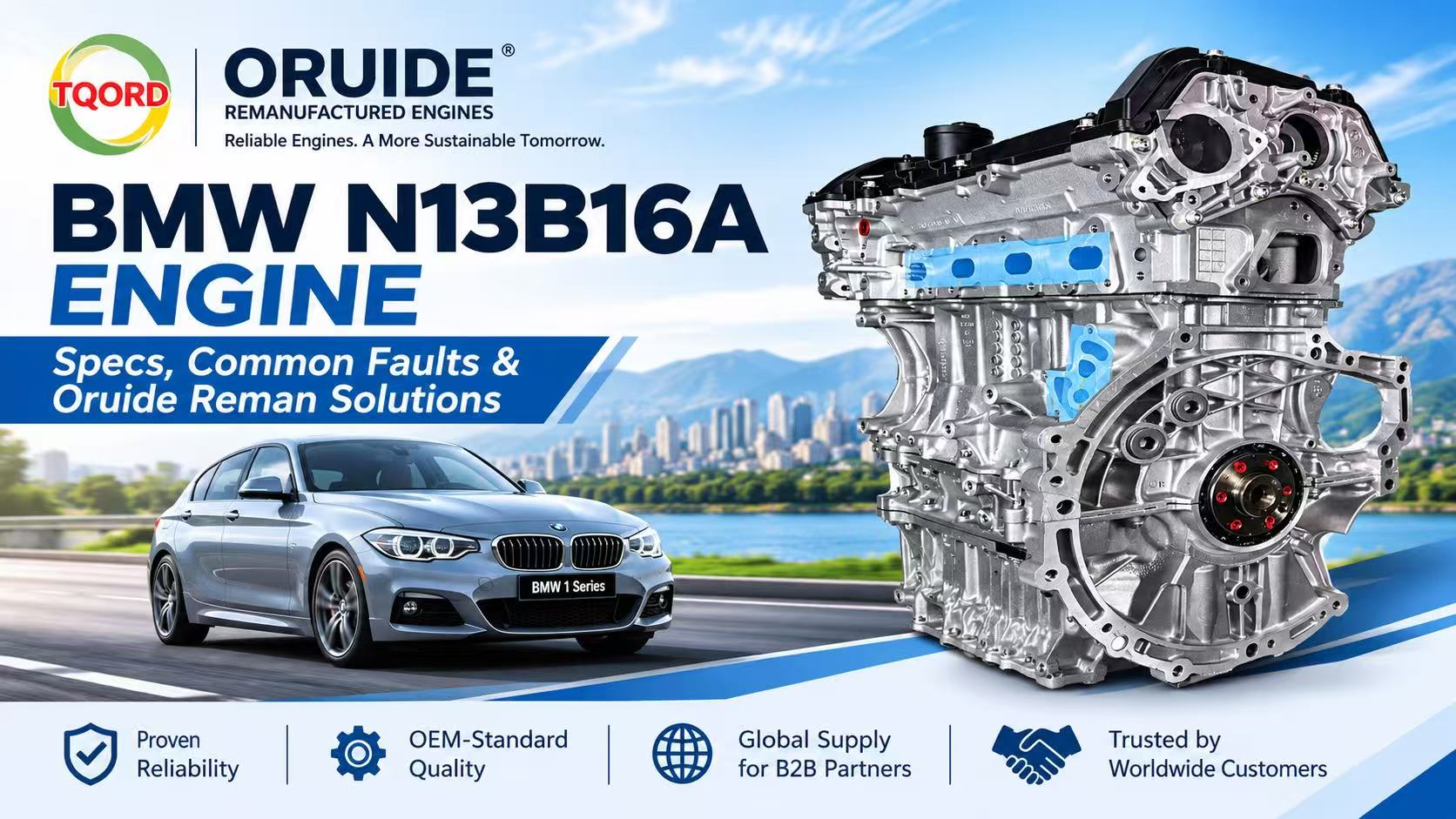
Oruide supplies remanufactured BMW engines for international B2B customers. This guide covers the N13B16A’s main technical characteristics, commonly reported service issues, fitment considerations and the remanufacturing checks relevant to replacement-engine buyers. Exact specifications and interchangeability can vary by model, production date and market, so VIN and engine-number verification should be completed before purchase.
BMW N13B16A Engine Overview & Technical Parameters
The BMW N13 is an all-aluminium, water-cooled, turbocharged inline-four petrol engine with DOHC and 16 valves. Its key technologies include BMW High Precision direct fuel injection, Valvetronic variable intake-valve lift and Double VANOS variable camshaft timing. The engine uses a timing chain and a turbocharging system; it is not naturally aspirated. Output varies by calibration and vehicle application, so the figures below describe a common 100 kW version rather than every N13 variant.
Parameter |
Value |
Displacement |
1,598 cc |
Configuration |
Inline-4, DOHC, 16-valve |
Aspiration |
Turbocharged petrol |
Bore × Stroke |
77.0 mm × 85.8 mm |
Max Power |
100 kW (136 PS) @ 4,400 rpm (common 116i calibration; varies by version) |
Peak Torque |
220 N·m @ 1,350–4,300 rpm (common 116i calibration; varies by version) |
Compression Ratio |
10.5:1 |
Fuel System |
BMW High Precision direct injection |
Valve / Timing Technology |
Valvetronic variable valve lift, Double VANOS; timing chain |
Dry Weight |
Not stated — reliable application-specific figure not confirmed |
Emission Standard |
Varies by model, market and production date; verify by VIN |
Production Period |
Introduced in 2011; fitted to selected applications into the mid-2010s |
12 months / customized terms available for qualified B2B orders (confirm order-specific terms) |
Compatible Vehicle List
Make |
Production Year |
Model |
Variant |
BMW |
2011–2015 (application-dependent) |
1 Series F20/F21 |
114i / 116i / 118i (engine output varies) |
BMW |
2012–2015 (application-dependent) |
3 Series F30/F31 |
316i (confirm exact engine version by VIN) |
Fitment can vary with production date, engine output, emissions specification, transmission, ancillaries and market. Even vehicles carrying the same model badge may use different engine versions or peripheral components. Before confirming a wholesale order, provide the VIN, build date and engine identification. Oruide can use these details to help check the proposed replacement against the original application; a model name alone is not sufficient to guarantee interchangeability.
Known Common Issues & Oruide’s Failure Analysis Solution
As with other direct-injection turbocharged petrol engines, N13 engines can develop age- and mileage-related issues. Symptoms are not unique to one component, so diagnosis should include fault-code reading, live data and mechanical checks rather than replacing parts based on symptoms alone.
1. Valvetronic System Faults Valvetronic motor, eccentric-shaft sensor or related wiring faults can cause rough idle, reduced power, warning lights or emergency running mode. These symptoms can also have other causes, so the system should be checked with BMW-capable diagnostics. During remanufacturing, inspect the Valvetronic motor, eccentric shaft mechanism, sensor connections and related components; replace parts only when inspection or test results justify it, then carry out the required adaptation procedure.
2. Intake-Valve Carbon Deposits Because the N13 uses direct fuel injection, petrol does not wash the backs of the intake valves. Oil vapour from the crankcase ventilation system can contribute to deposits over time. Heavy deposits may cause rough idle, hesitation or misfires. Inspect the intake ports and valves when symptoms or mileage indicate a need; use an appropriate cleaning method, such as walnut-shell blasting where suitable, and inspect the throttle body and crankcase ventilation system.
3. High-Pressure Fuel-System Problems The high-pressure fuel pump, injectors and low-pressure fuel supply can develop faults that lead to extended cranking, hard starting, misfires, reduced power or fuel-pressure faults. These symptoms can also be caused by ignition or sensor problems. Diagnosis should compare commanded and actual fuel pressure and check the low-pressure supply, wiring and injectors. Inspect the pump and associated sealing surfaces, and replace components when test results show they are out of specification.
4. Ignition-Coil and Spark-Plug Wear Worn spark plugs or failing ignition coils can cause misfires, especially under load, and may trigger a check-engine warning. Check fault codes and misfire counters, inspect spark plugs for condition and correct specification, and test the ignition coils before replacement. During engine preparation, inspect spark-plug threads and coil connectors; advise buyers to confirm whether plugs and coils are included in the supplied package.
Oruide’s N13B16A Remanufacturing Workflow
Oruide’s remanufacturing process is designed to assess the condition of each engine core, carry out the required machining and component replacement, and complete the applicable checks before shipment. The exact operations depend on the condition of the core and the agreed supply specification:
- Core Receiving & Sorting: Each incoming core is identified and assessed. Relevant inspections and tests are carried out to determine whether the block, cylinder head and major components are suitable for remanufacturing. Cores with cracks or damage that cannot be economically repaired are rejected.
- Full Disassembly & Cleaning: The engine is disassembled for inspection. Reusable components are cleaned using suitable processes to remove deposits, sludge and old gasket material, with oilways and coolant passages checked for contamination or blockage.
- Precision Machining: Where measurements show that machining is required and the component remains within repair limits, operations may include cylinder honing, valve-seat reconditioning, surface machining and thread repair. Work is assessed against applicable BMW specifications and component limits.
- Replacement of Wear Components: Gaskets, seals, bearings, piston rings, timing-chain components and other worn parts are inspected and replaced as required by condition and the agreed remanufacturing scope. Valvetronic and fuel-system components are checked and addressed according to test results.
- Assembly & Functional Checks: Technicians assemble the engine using the applicable tightening procedures and specifications. Checks may include oil-system and coolant-system integrity, leak checks and Valvetronic operation/adaptation, as applicable to the build and available test equipment.
- Final Inspection & Export Packing: Each completed unit undergoes a final inspection and the checks included in the agreed quality-control scope. Inspection records and export packing documentation can be prepared as applicable to the order and destination requirements.
Oruide supplies remanufactured BMW engines and other engine variants to international B2B customers. For N13B16A enquiries, please provide the vehicle VIN, engine code, required quantity and destination country or port. This information helps our team review fitment, confirm the supply scope and prepare a quotation for a single replacement or a bulk order.
Q&A
Q1: Is the BMW N13B16A an interference engine?
A1: Do not assume that the N13B16A is a non-interference design. The original article’s categorical non-interference claim is not sufficiently supported by reliable technical documentation. If timing-chain failure or timing loss is suspected, do not continue running the engine; inspect the timing system and check for possible valve-to-piston contact.
Q2: Which engine oil and service interval should be used for the N13B16A?
A2: Use an engine oil carrying the BMW approval specified for the exact vehicle, engine version and market. Viscosity grade and service interval can vary by application and operating conditions. Check the vehicle’s owner information or BMW service data by VIN rather than treating 5W-30 or a fixed 15,000 km interval as universal.
Q3: Can an N13 engine from one BMW model be installed directly in another?
A3: Not necessarily. Engine output, engine management, wiring, emissions equipment, sump, mounting points, cooling connections and attached components can differ by application. Confirm the full engine identification and compare the original and replacement part numbers using the VIN before ordering. Do not rely on model year or displacement alone.
Q4: What is the difference between an Oruide remanufactured N13B16A and a used engine?
A4: A used engine is generally supplied in its existing condition, with internal wear and service history that may be unknown. A remanufactured engine is disassembled, inspected and repaired or rebuilt according to the supplier’s defined process and agreed scope. Ask for the actual component-replacement list, inspection records, test scope and warranty terms for the specific unit.
Q5: Can I get bulk pricing for BMW N13B16A engines?
A5: Oruide accepts B2B wholesale enquiries. Send the required quantity, vehicle VINs or full engine codes, destination port and any packaging or documentation requirements so our sales team can review fitment and prepare a quotation.
Ready to source high-quality remanufactured engines from a reliable engine supplier? Fill out our form to get a customized quote within 24 hours. We’ll help you select the right engine model, confirm MOQ, and outline delivery timelines, so you can source with confidence.