
 EN
EN



Toyota 2AZ Engine Problems: What Owners Should Know
The Toyota 2AZ-FE is a 2.4L inline-four gasoline engine produced from the early 2000s to the early 2010s, renowned for its durability in daily driving. It powered popular models like the Toyota Camry, RAV4, and Scion tC, becoming a staple in Toyota’s mid-size and compact lineups. However, as these vehicles age and cross the 100,000-mile mark, three recurring issues—excessive oil consumption, cylinder head bolt thread failure, and overheating—often emerge, impacting reliability and ownership costs. This guide breaks down these problems, their root causes, and the most effective solutions for high-mileage 2AZ-FE engines.
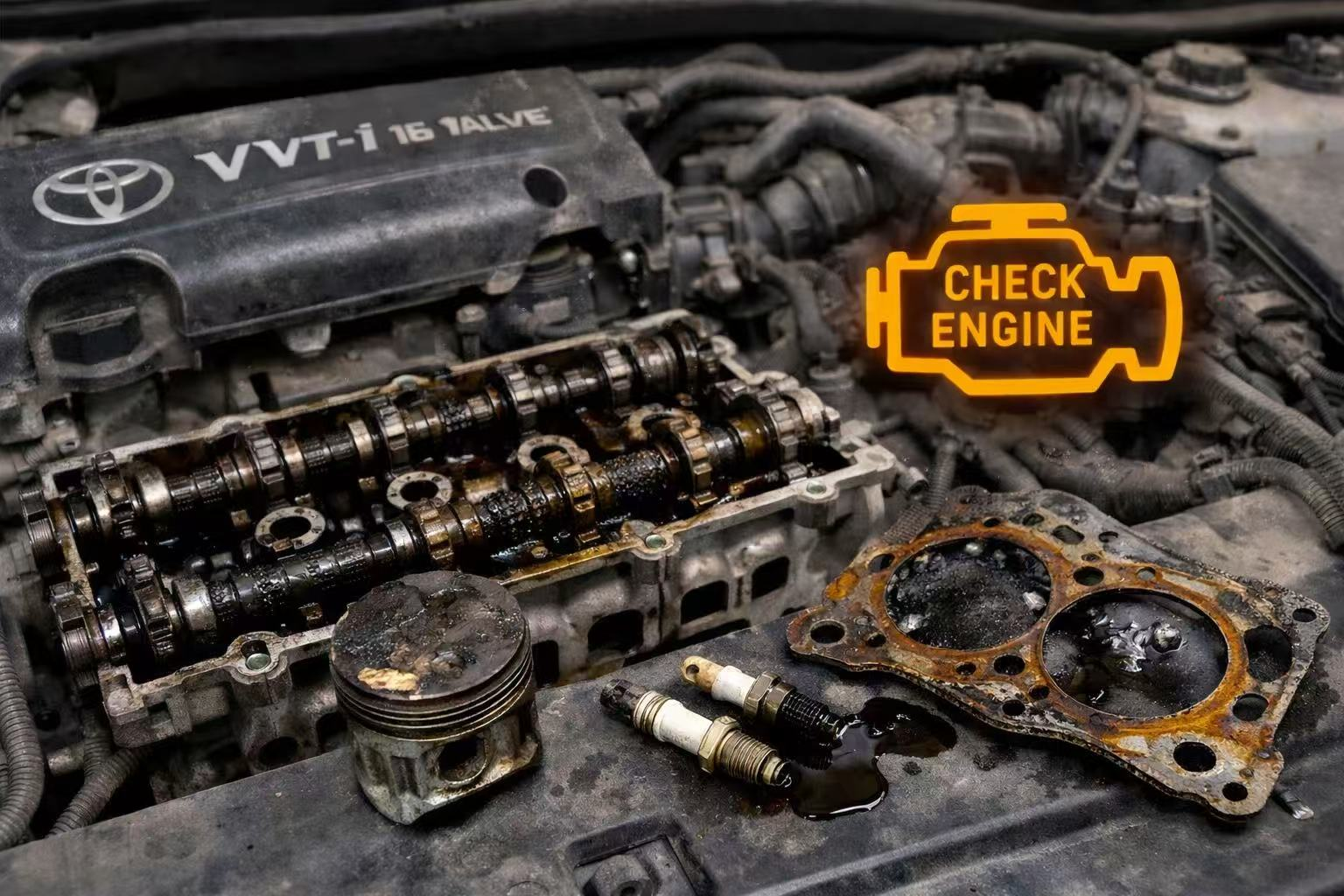
Overview of the Toyota 2AZ Engine
The Toyota 2AZ-FE is a 2.4-liter inline-four (I4) engine featuring an aluminum alloy cylinder block and cylinder head, designed for a balance of performance and fuel efficiency. Equipped with dual overhead camshafts (DOHC) and Toyota’s Variable Valve Timing with intelligence (VVT-i) system, it delivers smooth power delivery and improved low-end torque.
Widely used across Toyota’s lineup, the 2AZ-FE was factory-installed in:
●Toyota Camry (2002–2011)
●Toyota RAV4 (2001–2008)
●Toyota Scion tC (2005–2010)
Its aluminum construction reduces overall vehicle weight, while VVT-i optimizes valve timing for varying engine speeds. Despite these strengths, the engine’s design and material choices contribute to specific wear-related issues in high-mileage units.
Common Problems in the Toyota 2AZ Engine
●Excessive Oil Consumption
Excessive oil consumption is the most prevalent issue with the 2AZ-FE, typically appearing after 100,000 miles. Owners report needing to add a quart of oil every 700–1,000 miles, far exceeding Toyota’s factory specifications.
The primary cause is a piston ring design flaw. The engine’s oil control rings are prone to carbon buildup and sticking in their grooves over time, losing their ability to scrape oil off the cylinder walls. This allows oil to seep into the combustion chamber, where it burns and produces blue exhaust smoke. Additionally, long-term use can wear the cylinder walls, widening clearances and exacerbating oil consumption. Toyota issued technical service bulletins addressing this issue, recommending piston ring replacement for affected engines.
●Cylinder Head Bolt Thread Failure
Cylinder head bolt thread failure is a critical mechanical issue unique to the 2AZ-FE’s aluminum cylinder block. Aluminum’s lower tensile strength compared to cast iron makes the bolt threads susceptible to stripping or stretching, especially after repeated heat cycles or improper torque during maintenance.
When threads fail, the cylinder head loses its seal against the block, leading to coolant leaks at the head gasket joint and, in severe cases, head gasket failure. Symptoms include white smoke from the exhaust (indicating coolant entering the combustion chamber), milky oil (a sign of coolant mixing with oil), and overheating. If left unaddressed, this can cause warping of the aluminum cylinder head or block, resulting in catastrophic engine damage.
●Overheating Issues
Overheating is often a secondary symptom of other 2AZ-FE problems but can also occur independently due to cooling system wear. The most common causes include:
●Water pump failure: Bearings or impellers wear out over time, reducing coolant circulation efficiency.
●Radiator clogs: Debris (e.g., leaves, road grime) blocks external fins, or mineral deposits restrict internal flow, lowering heat dissipation.
●Thermostat sticking: A stuck closed thermostat prevents coolant from flowing to the radiator, causing rapid temperature spikes.
●Head gasket leaks: As mentioned earlier, failed head gaskets allow combustion gases to enter the cooling system, creating air bubbles and reducing coolant flow.
Overheating can lead to warped cylinder heads, seized pistons, or cracked blocks—repairs that are often cost-prohibitive for high-mileage vehicles.
Repair vs Remanufacture vs Engine Replacement
When faced with 2AZ-FE issues, owners have three core solutions, each with distinct cost, labor, and reliability tradeoffs.
Repair is ideal for isolated, minor issues—such as a faulty water pump, clogged radiator, or early-stage piston ring sticking. Repairs are low-cost and fast, but they only address symptoms, not underlying wear. For example, replacing a water pump won’t fix piston ring-related oil consumption, and thread repairs may fail again in aluminum blocks.
Remanufacture involves disassembling the engine, replacing worn components (pistons, rings, bearings, gaskets), and machining the block/head to factory specifications. Rebuilds restore performance but require extensive labor (15–20 hours) and cost $2,500–$4,000. They’re best for engines with moderate wear, but success depends on the mechanic’s expertise—poor machining or assembly can lead to repeat failures.
Engine replacement swaps the faulty unit for a new or remanufactured engine. New OEM engines are expensive ($4,000–$6,000) and hard to find for discontinued models. Remanufactured engines, by contrast, offer like-new reliability at a lower price point. Many workshops recommend working with a remanufactured engine supplier when the original engine has severe internal damage, as this option balances cost, quality, and turnaround time.
How a 2AZ Remanufactured Engine Is Restored
Professional remanufacturing transforms worn 2AZ-FE cores into reliable units that meet or exceed OEM standards, following a rigorous, multi-step process:
1.Cleaning and Disassembly: The engine core is completely torn down, and all components are cleaned with industrial degreasers and media blasting to remove carbon, rust, and debris.
2.Inspection and Measurement: Every part is precision-measured (e.g., cylinder bore diameter, crankshaft journal wear) using micrometers and dial gauges. Components that don’t meet OEM tolerances are discarded.
3.CNC Machining: The aluminum cylinder block and head are resurfaced on CNC machines to fix warping. Cylinder bores are honed (or bored and sleeved if worn) to ensure proper piston ring seating.
4.Parts Replacement: All wear items—including piston rings, bearings, gaskets, water pumps, and timing chains—are replaced with new OEM or premium aftermarket parts. Threaded inserts are installed in the cylinder block to eliminate head bolt thread failure risks.
5.Final Testing: The assembled engine is run on a dynamometer for 30–60 minutes to verify oil pressure, temperature, and performance. Leak tests and compression checks ensure no defects before packaging.
Professional manufacturers that specialize in remanufactured Toyota engines follow strict OEM-level inspection and testing procedures, ensuring each unit is ready for long-term use.
When Is a Remanufactured 2AZ Engine the Best Choice
A remanufactured 2AZ-FE engine is the optimal solution for three key scenarios:
1.High Mileage: Vehicles with 150,000+ miles often have simultaneous wear issues (e.g., piston rings, cylinder walls, and head bolt threads). Repairs or partial rebuilds will only delay further failures, making a remanufactured engine more cost-effective long-term.
2.Severe Internal Wear: If compression tests show low pressure across multiple cylinders, or if the block/head is warped beyond machining limits, a remanufactured engine is the only reliable fix.
3.Prohibitive Repair Costs: When rebuild costs exceed 50% of the vehicle’s value, or when combined repairs (e.g., piston rings + head gasket + thread repairs) approach $3,000, replacement is smarter. For vehicles with major internal wear, replacing the unit with a remanufactured 2AZ engine can often be more reliable than repeated repairs.
Conclusion
The Toyota 2AZ-FE is a workhorse engine, but its age-related flaws—excessive oil consumption, cylinder head bolt thread failure, and overheating—are well-documented, especially in units with 100,000+ miles. While minor issues can be fixed with targeted repairs, moderate to severe wear calls for a more permanent solution.
Remanufactured 2AZ-FE engines address all core design and wear issues through precision machining, new component replacement, and rigorous testing. They offer the reliability of a new engine at a fraction of the cost, making them the best choice for keeping high-mileage Camrys, RAV4s, and Scion tCs on the road for years to come. For owners looking to avoid repeat repairs and extend their vehicle’s life, a remanufactured engine is the most practical and cost-effective investment.
FAQ
1.Is the Toyota 2AZ engine reliable?
The 2AZ-FE engine is generally reliable for daily driving, but high-mileage engines may develop oil consumption and head bolt thread issues.
2.What causes oil consumption in the 2AZ engine?
Oil consumption is primarily caused by piston ring design limitations and carbon buildup in the oil control rings.
3.How much does it cost to replace a 2AZ engine?
Engine replacement typically ranges from $3,000 to $6,000 depending on whether a rebuilt or remanufactured engine is installed.
4.Is a remanufactured engine better than a rebuild?
Remanufactured engines are usually more consistent in quality because they are rebuilt under controlled factory processes and tested before installation.
Get a Fast Quote
Ready to source high-quality remanufactured engines from a reliable engine supplier in China? Fill out our form to get a customized quote within 24 hours. We’ll help you select the right engine model, confirm MOQ, and outline delivery timelines, so you can source with confidence.