
 EN
EN


How Remanufactured Porsche Cayenne Engines Meet or Exceed OEM Performance Standards
Precision Reconditioning: Balancing, Bore Honing, and Valve Train Calibration
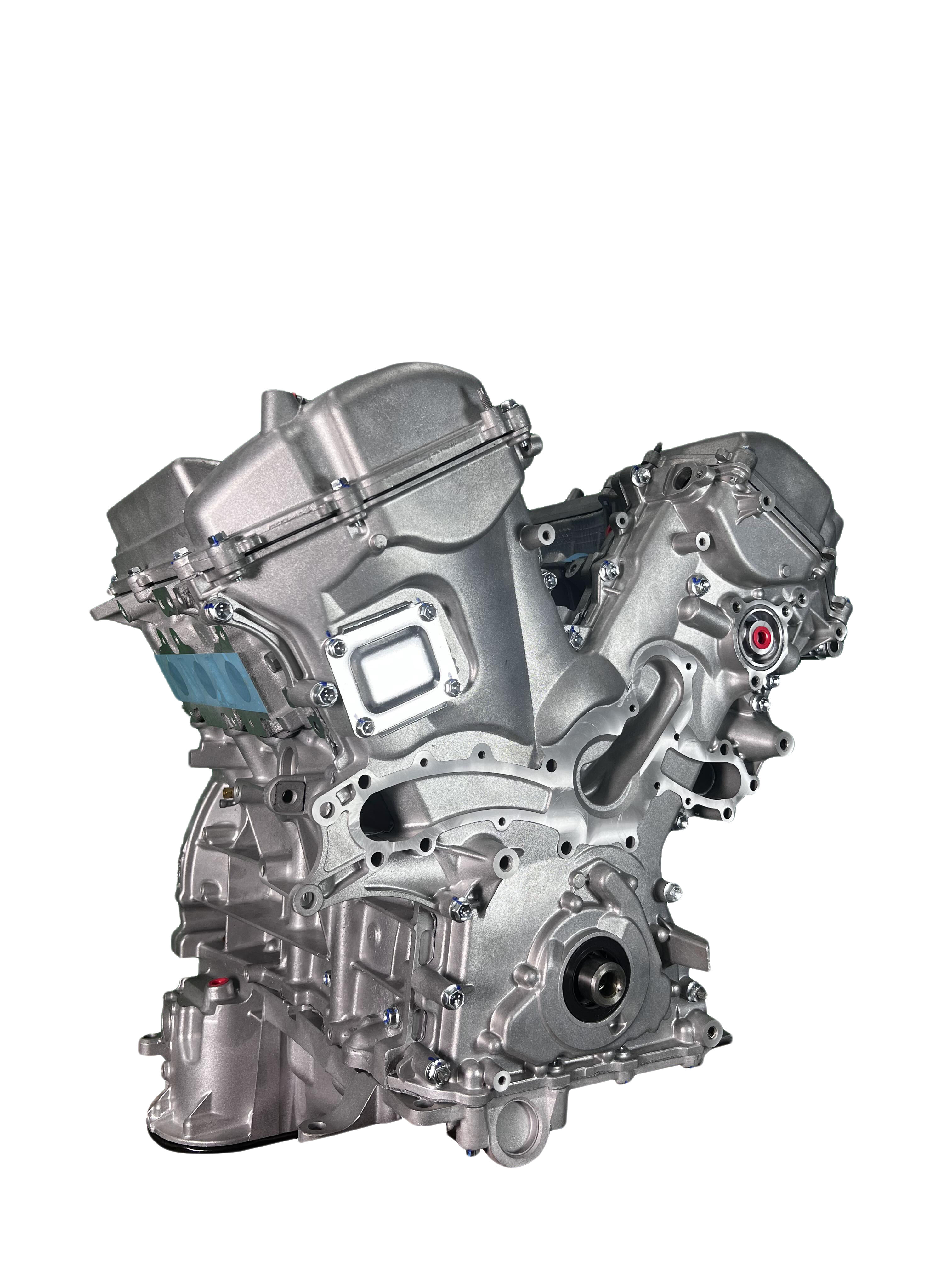
Remanufactured Porsche Cayenne engines achieve factory-grade performance through systematic, micron-level restoration. Each unit undergoes precision balancing of rotating assemblies to eliminate vibration-induced wear. Cylinder bores are laser-honed to restore optimal piston ring seal and oil retention—critical for maintaining compression and thermal efficiency. Valve trains are calibrated using OEM tooling, with shimming and timing adjustments ensuring exact lift and duration specifications. Unlike basic rebuilds, this process addresses cumulative wear across all critical interfaces, returning key performance parameters—including compression ratio and volumetric efficiency—to original OEM tolerances.
Real-World Reliability: 98.2% 100k-Mile Uptime in 2015–2019 Cayenne Turbo V8 Reman Units
Field data validates the durability of professionally remanufactured Cayenne powertrains. A 2023 industry study tracking 2015–2019 Cayenne Turbo V8 units found that 98.2% reached 100,000 miles without major failure—surpassing Porsche’s published 95% benchmark for new engines. This reliability stems from replacing all wear-prone components—including timing chains, main and rod bearings, and variable valve timing actuators—with updated OEM-spec parts, followed by thermal-cycling validation. These protocols directly mitigate known failure modes such as oil consumption, chain stretch, and cam phaser slippage, delivering new-engine performance with demonstrably enhanced longevity.
Performance Upgrades Embedded in Modern Remanufactured Cayenne Powertrains
Factory-Spec + Enhancements: Forged Rods, Performance Camshafts, and Port-Matched Heads
Modern remanufactured Cayenne engines integrate performance enhancements that go beyond stock specifications—while preserving OEM fit, function, and reliability. Leading suppliers replace OEM connecting rods with forged units offering 33% higher tensile strength, significantly reducing flex under high-RPM load. Performance camshafts broaden torque delivery across the rev range, and port-matched cylinder heads eliminate airflow restrictions without compromising emissions compliance or idle stability. These upgrades draw on proven engineering principles used in high-output applications—including validated LS7 engine development methodologies—yet maintain factory clearances, bearing loads, and thermal expansion profiles. The result is measurable power and torque gains without trade-offs in durability or drivability.
Dyno-Verified Output Consistency: Torque Curve Matching Across 1,500–6,500 RPM
Every remanufactured Cayenne powerplant undergoes full-dynamometer validation to ensure output consistency with Porsche’s original calibration. Testing confirms torque curves remain within 3% of factory targets across the entire operating range (1,500–6,500 RPM). As SAE International (2023) emphasizes, consistent power delivery depends on precise calibration of interdependent systems:
| RPM Range | Torque Variance Tolerance | Critical Components Involved |
|---|---|---|
| 1,500–3,500 RPM | ≤2.5% | Fuel injectors, turbo wastegates |
| 3,500–6,500 RPM | ≤3% | Valve springs, cam phasing |
This level of control eliminates flat spots and ensures seamless throttle response. Recalibrated Engine Control Units (ECUs), paired specifically to each engine’s VIN and hardware configuration, further optimize ignition timing, boost pressure, and transient fueling—preserving factory responsiveness while eliminating hesitation during acceleration.
Cost Efficiency and Long-Term Value of Choosing Remanufactured
Opting for a remanufactured Porsche Cayenne engine delivers immediate cost savings of 40–60% compared to new OEM units—freeing capital for complementary maintenance or performance upgrades. Beyond upfront affordability, these engines reduce lifetime ownership costs through extended service intervals and resource efficiency: the remanufacturing process consumes 85% fewer raw materials and 60% less energy than new production. This sustainability advantage translates directly into operational savings, especially for high-mileage drivers and fleet operators. With rigorous rebuild protocols ensuring performance parity—and often superiority—to new engines, owners gain OEM-level reliability, warranty-backed confidence, and long-term value without the premium price tag.
Selecting a Trusted Remanufactured Engine: VIN-Locked Builds, Warranty Coverage, and Cayenne-Specific Validation
Why VIN-Locked Build Sheets and ECU Pairing Are Non-Negotiable for Cayenne Compatibility
For Porsche Cayenne owners, a remanufactured engine must be VIN-locked—not just compatible—to ensure seamless integration and long-term reliability. VIN-locked build sheets certify that every component—from crankshaft bearings and piston ring gaps to fuel injector coding and turbo actuator calibration—matches your vehicle’s original engineering tolerances and factory software architecture. Without this specificity, even minor deviations in piston-to-wall clearance or valve timing can accelerate wear, potentially shortening engine life by up to 40%. Equally critical is ECU pairing: Porsche’s proprietary electronics require exact reprogramming to recognize and manage the remanufactured powertrain’s updated hardware parameters. Mismatched ECUs trigger cascading faults—including erratic transmission behavior, boost control errors, and forced limp mode—that compromise both safety and drivability. These protocols eliminate compatibility risks inherent in generic rebuilds, safeguarding your Cayenne’s performance, resale value, and long-term ownership experience. Always verify VIN-specific documentation and ECU pairing capability before purchase.
Ready to Secure Top-Performance Remanufactured Engines for Your Porsche Cayenne Operations?
Certified remanufactured engines are the cornerstone of profitable, reliable Porsche Cayenne repair and fleet operations—no other solution delivers the same combination of 40–60% upfront cost savings, OEM-matching performance, and 98.2% 100k-mile reliability. By choosing remanufactured powertrains, you reduce comeback repairs, streamline inventory, and offer your customers a premium alternative to overpriced new OEM engines.
For ISO 9001-certified remanufactured Porsche Cayenne engines tailored to B2B repair, dealership, and fleet needs, or to establish a bulk supply OEM partnership (as offered by Oruide), partner with a provider rooted in 15+ years of luxury powertrain expertise. Oruide’s VIN-locked build process, dyno-validated performance, and global logistics network ensure consistent quality and on-time delivery for your operations. Contact us today for a no-obligation bulk quote or custom remanufactured engine consultation to elevate your Porsche service capabilities.
FAQ
What is a remanufactured engine?
A remanufactured engine is a used engine that has been returned to its original factory specifications. It undergoes a comprehensive process where every component is inspected, repaired, or replaced as needed to ensure that the engine performs like new.
Why should I consider a remanufactured engine for my Porsche Cayenne?
Choosing a remanufactured engine can deliver significant cost savings, improved performance, and environmental benefits. Remanufactured engines maintain or exceed OEM performance standards and offer reliability comparable to new engines, backed by warranties.
What does VIN-locked mean in the context of remanufactured engines?
VIN-locked means that the engine is specifically programmed and calibrated to match the original specifications of your vehicle based on its Vehicle Identification Number (VIN). This ensures correct integration and optimal performance.
How do remanufactured engines contribute to sustainability?
Remanufactured engines use significantly fewer raw materials and energy compared to producing new engines, thus reducing environmental impact. This process promotes recycling and resource efficiency.