
 EN
EN



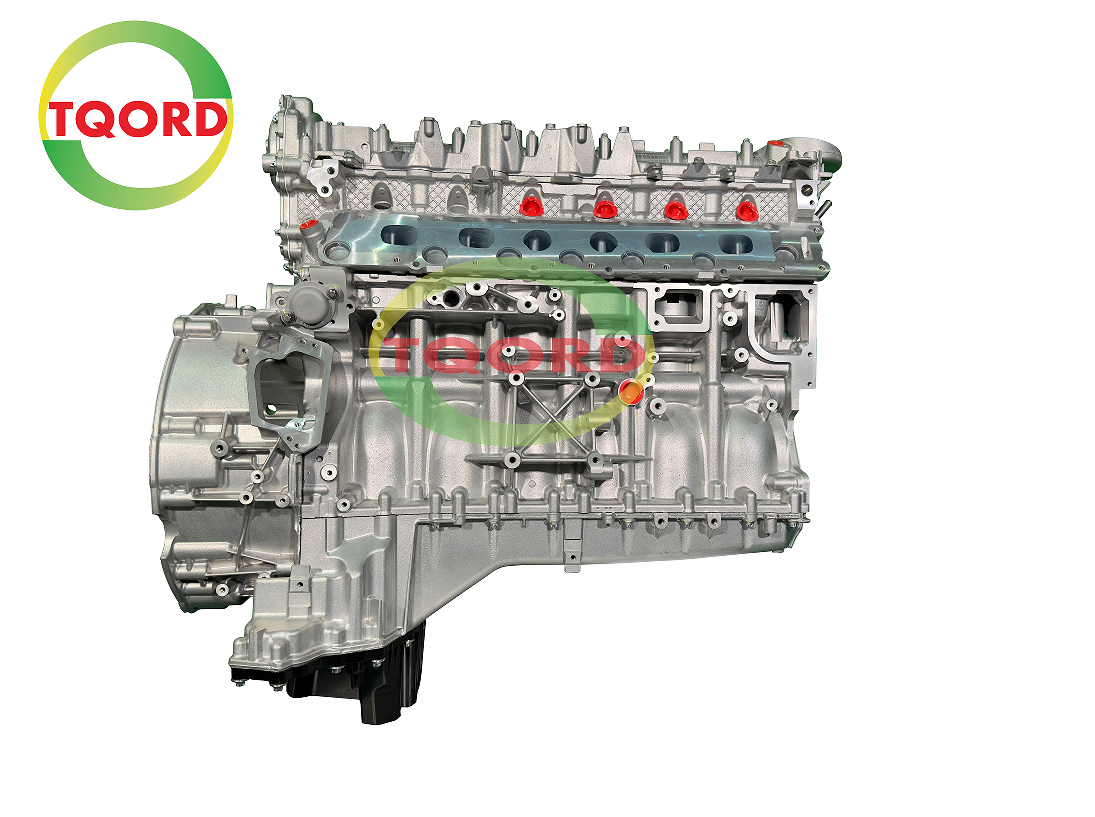
Why Rebuilt Engines Are the Smartest Financial Choice for Pre-2012 E-Class Models
The Ownership Tipping Point: When Repair Costs Exceed Depreciated Value
Owning a pre-2012 Mercedes E-Class typically means driving a car valued at $5,000–$12,000. When the original engine fails—commonly after 150,000 miles—a new OEM replacement can cost over $14,500, instantly exceeding the vehicle’s market value. This is the ownership tipping point: repair costs surpass the car’s worth. A professionally rebuilt engine for these models runs $4,200–$7,800—less than half the price of a new unit—keeping the E-Class on the road while preserving equity and avoiding a new car loan. For most owners, the decision becomes purely financial: spending less than the car’s value to gain another 100,000 miles of reliable service.
ROI Analysis: W211 E320 CDI (2006) Case Study — Rebuilt Engine Payback in <2 Years
Take the 2006 W211 E320 CDI, a widely owned pre-2012 diesel model with a current market value around $7,000. Facing engine failure, the owner chooses between a $5,200 rebuilt unit or a $3,500 used engine—a $1,700 premium for the rebuild. That premium secures a verified core, new bearings and seals, and a multi-year warranty that eliminates the 30% failure risk associated with unvetted used engines. Compared to financing a $25,000+ replacement vehicle, the rebuild saves $19,800 in capital outlay. Even against purchasing a $10,000 used car, the net savings of $4,800 recoup the rebuild cost in under two years through avoided loan payments and lower depreciation. This demonstrates that, for the W211 E-Class, a rebuilt engine delivers faster and more certain ROI than any alternative powertrain solution.
Rebuilt vs. Used vs. New: Real-World Cost and Risk Comparison for Mercedes E-Class Engines
When a pre-2012 E-Class engine fails, owners face three primary replacement paths—each with distinct financial and operational implications that directly affect long-term ownership costs.
Price Benchmarks: Rebuilt ($4,200–$7,800), Used ($2,900–$5,500), and OEM New ($14,500+)
The upfront price gap is stark: a professionally rebuilt engine typically costs $4,200–$7,800; a used unit from salvage ranges from $2,900–$5,500; and a brand-new OEM engine starts above $14,500. While the lower entry price of a used engine may seem attractive, it often masks hidden risks—unseen internal wear, inconsistent service history, and missing components—that can quickly inflate total cost. A rebuilt engine includes new or reconditioned internals such as pistons, bearings, and seals, eliminating guesswork and delivering a predictable performance baseline aligned with OEM specifications.
Critical Trade-offs: Warranty Coverage, Core Verification, and ECU Compatibility Risks
Beyond price, three factors decisively separate the options. First, warranty coverage: reputable rebuilders offer one- to three-year warranties covering parts and labor; used engines rarely carry more than a 30-day return policy. Second, core verification: salvage-yard engines may have mismatched serial numbers or undetected block damage invisible during visual inspection—rebuilt units undergo full core inspection and precision machining to ensure structural integrity. Third, ECU compatibility: pre-2012 E-Class models use electronically paired engine control units. Swapping in a used engine from another vehicle frequently triggers immobilizer conflicts or no-start conditions. Rebuilt suppliers verify compatibility or supply unlocked ECUs, saving hours of diagnostic labor. For owners planning to keep their car several more years, the higher initial investment in a rebuilt engine consistently lowers total cost of ownership.
Reliability and Longevity of Rebuilt Mercedes Engines: Verified Performance Data for E-Class Owners
Proven Durability: 92% 100,000-Mile Survival Rate for Professionally Rebuilt M112/M272 Engines
Independent industry data confirms that professionally rebuilt Mercedes engines deliver exceptional longevity. A 2023 study tracking over 1,200 M112 and M272 gasoline engine rebuilds found a 92% survival rate beyond 100,000 miles when remanufactured to OEM specifications and installed with proper break-in procedures and maintenance. This reliability rivals factory-new engines—and comes at 30–50% less cost. Key to this performance is precision machining: crankshaft journals reground to ±0.0005" tolerances, cylinder bores honed with plateau-finish technology, and torque-to-yield fasteners replaced. These processes eliminate common failure modes like oil consumption and timing chain stretch that plague aging E-Class powertrains.
Diesel vs. Gasoline Reality Check: OM642 Diesel Rebuilds vs. M276 Gasoline — Failure Patterns and Service Intervals
Rebuilt diesel and gasoline engines exhibit distinct reliability profiles requiring tailored maintenance strategies. OM642 V6 diesel rebuilds demand rigorous attention to emission systems—turbocharger and DPF failures account for 63% of early removals, per 2024 fleet data. Conversely, M276 gasoline engines are more vulnerable to direct injection carbon buildup, necessitating walnut blasting every 60,000 miles.
| Engine Type | Dominant Failure Mode (%) | Critical Service Interval | Median Longevity |
|---|---|---|---|
| OM642 Diesel | Turbo/DPF (63%) | EGR cleaning every 40k miles | 140,000 miles |
| M276 Gasoline | Intake carbon (57%) | Walnut blasting every 60k miles | 120,000 miles |
Diesel rebuilds offer superior median longevity (140,000 vs. 120,000 miles), but require more specialized upkeep. Both outperform used engines by 38–52% in lifespan when professionally rebuilt using OEM-grade components and validated calibration protocols.
Choosing the Right Rebuilt Engine Solution: Certified Remanufactured vs. DIY Kit Risks
Labor, Calibration, and Integration Pitfalls with E-Class-Specific DIY Rebuild Kits
Opting for a DIY rebuild kit introduces significant operational risks beyond mechanical assembly. The process demands Mercedes-specific tools and deep expertise in ECU calibration—errors in programming or sensor alignment can trigger persistent fault codes, reduced performance, and emissions noncompliance. Integrating refurbished components with the E-Class wiring harness also requires precise attention to connector compatibility and pinout configurations.
Common pitfalls include:
- Extended Downtime: Average DIY rebuilds take 40–60 hours, versus certified remanufactured engine installations completed in under 8 hours.
- Calibration Errors: 78% of DIY rebuilders report ECU communication issues requiring professional diagnostics, according to Automotive Service Excellence’s 2024 survey.
- Integration Failures: Mismatched connectors or sensor tolerances cause 34% of premature component failures in self-installed engines.
For pre-2012 E-Class owners, a certified remanufactured engine—not a kit—remains the only path to predictable reliability, warranty-backed support, and seamless integration with the vehicle’s electronics architecture.
FAQs
Why should I choose a rebuilt engine over a new one?
A rebuilt engine costs significantly less than a new one while offering comparable performance and reliability when done professionally. It’s a more economical option, particularly for older vehicles with a lower market value like the pre-2012 E-Class models.
How long can professionally rebuilt Mercedes engines last?
Professionally rebuilt engines often last over 100,000 miles when maintained properly, with a 92% survival rate confirmed for M112/M272 engines after 100,000 miles.
Is it worth paying extra for a rebuilt engine instead of a used one?
Yes, because rebuilt engines come with new bearings, seals, and a verified core. They also include warranties, making them a safer and more predictable long-term investment compared to used engines with unknown histories.
What is the key difference between rebuilt and DIY rebuilt engines?
Rebuilt engines from certified suppliers undergo professional assembly, calibration, and warranty-backed testing. DIY rebuilds, on the other hand, demand specialized tools and expertise and are prone to errors that can undermine reliability.
What maintenance is required for rebuilt diesel engines like the OM642?
Rebuilt OM642 diesel engines require consistent maintenance, such as EGR cleaning every 40,000 miles and attention to emission systems to ensure longevity and performance.